The ingredient, explained
Glycerin
Also called glycerol, this water-binding ingredient has been studied in creams for hydration and dry, eczema-prone skin.
Ingredient guide
What it is and what it does
Glycerin, also called glycerol, is a humectant. That means it helps attract and retain moisture. Its registry also lists roles in conditioning and controlling the formula's thickness.
About this ingredient: CosIng identity and functions via Open Beauty Facts ↗ · European Commission ingredient function definitions ↗
- Humectant
- Helps attract and retain moisture.
- Denaturant
- Makes a product unpalatable, often in alcohol-containing formulas.
- Hair conditioning
- Improves cosmetic hair properties such as softness, shine or combability.
- Oral care
- Supports cosmetic functions in the mouth, such as cleaning or deodorising.
- Perfuming
- A formulation role for perfume and aromatic raw materials that give a product its scent.
- Skin protecting
- A technical role associated with protecting skin from external factors.
- Viscosity controlling
- Adjusts how thick or fluid a product is.
Function definitions: European Commission ingredient function definitions (SCCNFP/0299/00, pages 16 to 20) ↗ · Danish Environmental Protection Agency: Cosmetic fragrance functions ↗
Registry functions describe possible formulation roles, not results for a finished product. A dictionary entry is not an approval or a safety assessment.
A closer look
What the research shows
Human topical research
A study in 26 volunteers measured increased moisture after a glycerol-based cream. In a 197-patient trial, 20% glycerin and a urea-saline cream had comparable dryness outcomes, with less smarting reported for glycerin. A separate 109-patient trial found better dryness and water-loss results with the urea-saline cream.
What this does not tell us
The results depend on the complete cream and outcome measured. In the 109-patient trial, glycerin did not reduce water loss more than its base. These findings do not mean every glycerin-containing product repairs the skin barrier.
Sources for this summary. PubMed 16679823 ↗PubMed 12013198 ↗PubMed 11737814 ↗
Research review checked Sep 30, 2026
Selected primary sources were reviewed for the existing research brief on 30 September 2026, with exact ingredient, route and combination limitations recorded. This was a bounded editorial review, not a systematic search.
Ingredient research is not proof that a product containing this ingredient works.
Read the 3 selected studies
Human topical research · n=197
A double-blind study comparing the effect of glycerin and urea on dry, eczematous skin in atopic patients. ↗
Acta dermato-venereologica · 2002
Human topical research · n=109
Instrumental and dermatologist evaluation of the effect of glycerine and urea on dry skin in atopic dermatitis. ↗
Skin research and technology : official journal of International Society for Bioengineering and the Skin (ISBS) [and] International Society for Digital Imaging of Skin (ISDIS) [and] International Society for Skin Imaging (ISSI) · 2001
Human topical research · n=26
An in vivo randomized study of human skin moisturization by a new confocal Raman fiber-optic microprobe: assessment of a glycerol-based hydration cream. ↗
Skin pharmacology and physiology · 2006
Follow the formula
Products containing this ingredient
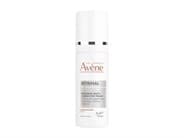
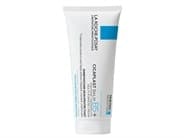
From the Serenfold edit. Linked by the ingredient list, without an efficacy ranking.


Names and identifiers
Registry identity
Glycerol
- INCI name on ingredient lists
- GLYCERIN
- CAS registry number
- 56-81-5
- EC number
- 200-289-5
Other recorded names (3)
- glycerol
- glycerolum
- Glyceryn/Glycérine
Sources for this ingredient record
- EU CosIng ingredient registry (via Open Beauty Facts taxonomy) ↗ · ODbL 1.0 (Open Beauty Facts database) · Recorded Aug 8, 2026
- European Commission ingredient function definitions ↗ · Recorded Sep 30, 2026