The ingredient, explained
Malic Acid
Selected evidence concerns human topical irritation experiment.
Ingredient guide
What it is and what it does
Butenedioic acid, hydroxy-, -2S--
About this ingredient: EU CosIng ingredient registry (via Open Beauty Facts taxonomy) ↗
- AHA exfoliant
- Alpha hydroxy acid category. Exfoliation depends on the acid, concentration, pH and the rest of the formula; an AHA may also be used to control pH.
- Buffering
- Helps resist changes in a formula's pH.
Function definitions: FDA: Alpha hydroxy acids ↗ · European Commission ingredient function definitions (SCCNFP/0299/00, pages 16 to 20) ↗
Registry functions describe possible formulation roles, not results for a finished product. A dictionary entry is not an approval or a safety assessment.
A closer look
What the research shows
Human topical research
Malic acid alone did not significantly irritate skin under the tested conditions, and fruit-acid/SLS exposure did not increase cumulative irritation compared with SLS/water.
What this does not tell us
Four-day experimental exposure in healthy volunteers, not a full cosmetic safety assessment, exfoliation trial or guarantee of tolerability at other concentrations. Sample size absent from abstract.
Sources for this summary. PubMed 16040403 ↗
Research review checked Oct 1, 2026
Bounded review of 4 local candidate titles, selected relevant local abstracts, and targeted primary-source web searches. Not an exhaustive systematic review.
Ingredient research is not proof that a product containing this ingredient works.
Read the 1 selected study
Human topical research
Fruit acids do not enhance sodium lauryl sulphate-induced cumulative irritant contact dermatitis in vivo. ↗
Acta dermato-venereologica · 2005
Follow the formula
Products containing this ingredient
From the wider catalogue. Linked by the ingredient list, without an efficacy ranking.

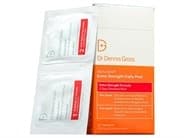
Dr. Dennis Gross Skincare
Dr. Dennis Gross Skincare Alpha Beta Extra Strength Daily Peel
Inside the formulaNames and identifiers
Registry identity
Butenedioic acid, hydroxy-, -2S--
- INCI name on ingredient lists
- MALIC ACID
- CAS registry number
- 97-67-6
- EC number
- 202-601-5
Sources for this ingredient record
- EU CosIng ingredient registry (via Open Beauty Facts taxonomy) ↗ · ODbL 1.0 (Open Beauty Facts database) · Recorded Aug 8, 2026